Art of War: Legions
- 4.1
- Rating
- 50.00M
- Installs
- Free
- Price

 Analysis by App-foxy
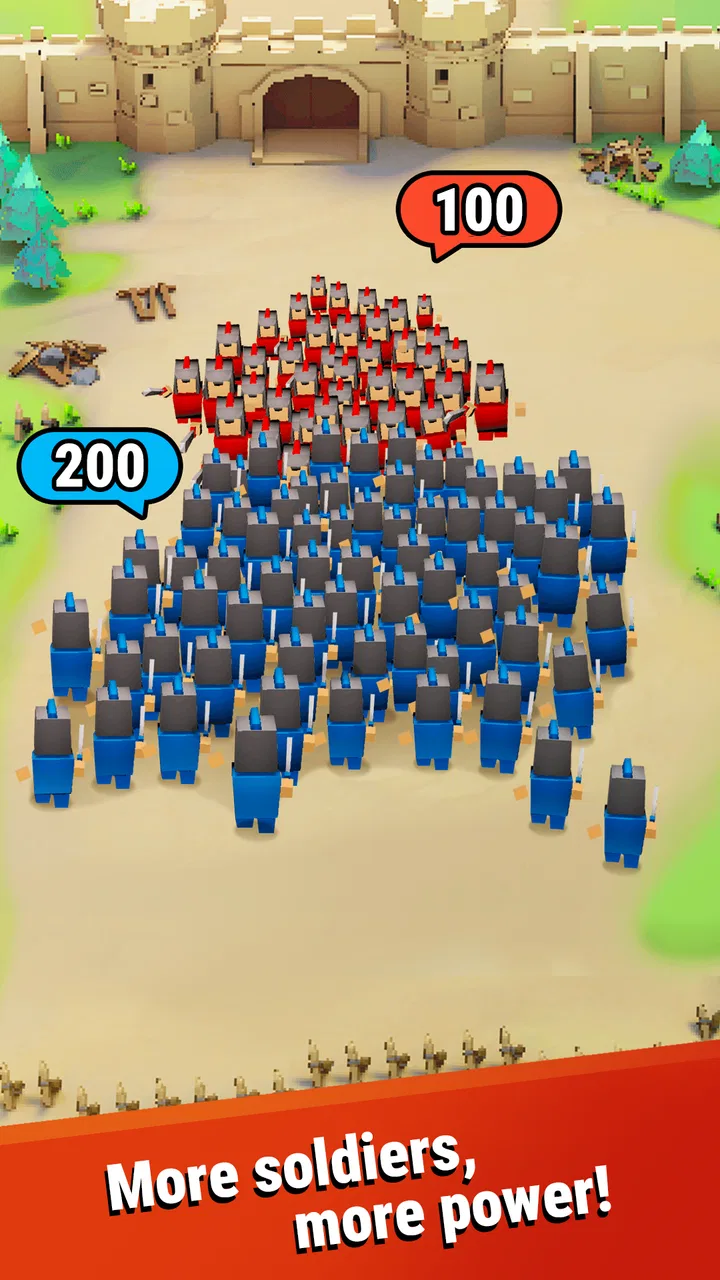
I first approached Art of War: Legions as a quick strategy game for spare moments, but it works better when treated as a small planning exercise. The basic idea is easy to understand: build an army, arrange your formation, improve your troops, and send them against opposing forces. The interesting part is that the preparation often matters more than frantic tapping once the battle begins.
That makes it a natural fit for a shared household device. One person can try a formation, another can suggest moving units around, and a younger player can enjoy the visual battles without needing to understand every strategic choice immediately. At the same time, the game has enough progression and resource decisions to make it less suitable for someone who only wants a completely consequence-free arcade distraction.
How the game feels when several people share the device
In my experience, the best shared-use scenario is a short session after dinner or during a journey. I might handle the army upgrades, while someone else looks at the battlefield and proposes a different arrangement. Because the central decisions are visible on screen, the game is easier to discuss aloud than a strategy title that hides everything behind complicated menus.
You May Also Like

 AccuWeather: Weather Radar
AccuWeather Review: A Quick, Clear Forecast for Everyday Decisions
For everyday plans, the best forecast is the one you can understand quickly. AccuWeather makes rain timing, radar, and local conditions easy to act on, with a few trade-offs.

 Hill Climb Racing
Why Hill Climb Racing Still Turns Crashes Into One More Run
A tiny car, a bumpy hill and one more upgrade: Hill Climb Racing keeps resurfacing because its simple chaos makes every near-miss feel personal.

 AliExpress - Shopping App
AliExpress Makes Global Shopping Feel Personal, but Shoppers Bear the Risk
AliExpress turns a global marketplace into a pocket-sized discovery engine. Its reach is useful, its shopping loop compelling, and its trade-offs easy to miss.

 Lords Mobile: Kingdom Wars
Lords Mobile Is a Kingdom-Building Routine, Not a Quick Match
A case-by-case verdict on the building, battles, device demands, and social commitments that make Lords Mobile rewarding for some players and exhausting for others.

 PDF Scanner app - TapScanner
TapScanner Makes Paperwork Easier to Capture, Check, and Share
TapScanner makes scanning with a phone feel less like a rescue operation and more like a dependable step in getting work done. Its capture tools are useful, though not flawless.

 Block Blast!
 Shows How Much a Puzzle Game Can Leave Out
A quiet grid game shows why puzzle players increasingly value instant clarity, repeatable skill and low-pressure play—and where the genre still needs to catch up.
More From Our News Desk
View All News


A typical routine could be simple: play a battle, inspect what went wrong, adjust the formation, and try again later. That rhythm gives each person a useful role. A child may enjoy watching the troops collide, while an older player can focus on why one side of the formation collapsed. The game does not need to be played as a formal group activity, but it creates natural opportunities for cooperation.
There is also a practical advantage to its battle structure. A shared device does not have to remain in one person’s hands for a long uninterrupted block. Someone can make a formation change, put the device down, and let another household member continue. That makes it more flexible than games that demand constant real-time attention from one player.
Still, shared play requires a clear understanding of whose progress is being changed. If several people use the same game installation, an upgrade or formation adjustment can affect the next person’s experience. I would agree on a simple rule before handing over the device: one person manages progression, or everyone announces changes before confirming them. That small boundary prevents most household arguments.
The first decisions are simple, but they matter
The early experience is approachable because the main loop is immediately readable. You are not asked to master a huge rulebook before seeing a result. Instead, the game encourages you to observe the army, make a practical adjustment, and learn from the outcome. That makes it welcoming for players who are new to strategy games.
My advice is not to spend every available resource as soon as it appears. A tempting upgrade may improve one part of the army, but a formation problem can still leave that stronger unit badly positioned. I found it more useful to ask whether the whole arrangement is balanced before investing heavily in one troop type or one improvement.
This is one of the game’s less obvious lessons: upgrading and arranging are connected decisions. A powerful unit placed where it cannot influence the important clash may contribute less than a modest unit in a better position. When playing with a child or a less experienced relative, this is a good teaching moment because it turns failure into a visible planning problem rather than a mystery.
Setting boundaries before purchases become a problem
The game is free to download, which lowers the barrier for trying it on a household phone or tablet. It also includes in-app purchases ranging from $0.99 to $104.99 per item. That range deserves attention in a shared-device setting, especially when younger users may be curious about faster progression or extra resources.
I would not treat the free price as meaning that every part of the experience is equally free of pressure. The progression loop naturally makes improvements attractive, and a player who is invested in building an army may feel tempted to pay rather than wait or continue playing normally. That does not make the game unusable, but it does make a purchase boundary sensible from the beginning.
For a family or group sharing one device, the safest everyday arrangement is to decide who is allowed to approve purchases and to avoid handing over the device while a payment decision is open. The game itself can be enjoyed without turning every session into a spending discussion, but that works best when the household rule is clear before anyone starts.
There is another boundary worth setting: distinguish experimentation from permanent progression. I like letting another player test a formation, but I would avoid allowing casual experimentation to consume valuable upgrade resources without agreement. A quick conversation such as “try the layout, but do not confirm the upgrade yet” protects both the account and the fun.
Coordinating formations instead of arguing about results
The most productive way to play together is to divide decisions into stages. One person can describe what happened in the last battle, another can identify the weak point, and the person holding the device can make one change at a time. If several things are altered at once, it becomes difficult to know which decision actually helped.
This method also reveals a genuine strength of the game: it gives players a reason to compare observations. Was the defeat caused by the front line breaking too quickly, or did the army fail because support was placed poorly? Even without turning the session into a serious analysis, asking one focused question before the next attempt makes the game more satisfying.
I especially recommend keeping a mental note of the formation that worked rather than changing it after every victory. A successful arrangement can be useful as a baseline. From there, adjust one section when a new opponent exposes a weakness. This is more reliable than rebuilding the entire army whenever progress becomes difficult.
For younger players, coordination should stay encouraging. It is easy for an experienced player to take over because the correct move seems obvious, but that removes the learning opportunity. I would let the child choose one change, then explain what happened afterward. The game is more enjoyable when the shared session feels like discovery instead of a test they are expected to pass.
For older players, the opposite problem can appear: too much discussion before every move. The game is still meant to be convenient, so I would keep the household strategy talk short. Choose a single goal for the next attempt, make the adjustment, and see whether the result supports the idea.
What the progression gives you beyond the battles
The progression system is the reason this feels more substantial than a simple battle viewer. You are not only watching armies clash; you are deciding how to improve the force over time. That creates a useful sense of continuity when the game is opened repeatedly across several days.
However, progression can also make losses feel more personal. If a player has spent time arranging an army and improving units, a failed battle may feel like wasted effort even when it provides useful information. I found that the healthiest approach is to treat each defeat as a signal about the formation, not as proof that the account needs an immediate purchase.
A practical workflow is to separate “testing” sessions from “progress” sessions. During testing, make a modest change and observe the result. During progression, spend resources only after deciding which weakness you are trying to solve. This reduces impulsive upgrades and makes the army develop with a clearer purpose.
That distinction is particularly helpful on a shared device. If one person wants to experiment while another is trying to advance efficiently, both goals can coexist when they are named clearly. Otherwise, the player focused on experimentation may appear careless, while the player focused on progress may seem overly controlling.
Age context and trust in a shared household
The content rating is Everyone 10+, which matches my impression of the presentation: the focus is on animated armies and strategic conflict rather than realistic violence. Even so, age suitability is not the only question. A younger player may understand the battles but not the value of in-app purchases, the consequences of spending resources, or the importance of keeping one person’s progress separate from another’s.
That is why I would introduce the game through a supervised shared session rather than simply passing over the device and leaving the player to discover everything alone. A short explanation of formations, upgrades, and spending expectations is enough to establish trust without making the game feel like homework.
Households should also be honest about account boundaries. If the device is shared but the game’s progress is treated as belonging to one person, everyone should know that before playing. If the household is comfortable with a communal save, then changes should be discussed openly. The important point is not which arrangement is chosen; it is that the arrangement is understood.
I would be more cautious about recommending it to a child who becomes frustrated by repeated losses or who tends to click through every prompt quickly. The game rewards patience more than impulsive action, and the combination of progression with optional purchases can be uncomfortable for players who have trouble waiting. In that situation, a simpler puzzle game may be a better household choice.
Where it stands among other mobile strategy games
Compared with a traditional turn-based strategy game, this one is lighter and faster to enter. You spend less time reading extensive rules and more time making formation decisions that can be understood at a glance. That is an advantage for casual shared play, especially when people are taking turns in short bursts.
Compared with a fast real-time strategy game, it is less demanding on reflexes. The appeal is not constant tapping or managing several actions at once. The preparation phase carries much of the interest, so players who enjoy thinking before a clash may prefer it to a more frantic alternative.
The trade-off is depth. Someone looking for a large campaign, a complex economy, or detailed control over every moment of combat may find the experience comparatively narrow. I would choose this game for accessible formation planning and gradual army improvement, not for the scale or freedom associated with a full desktop strategy title.
It also differs from a purely casual idle game because your choices still influence how the army performs. Watching progress accumulate is part of the appeal, but the formation layer gives you something concrete to consider. If you want a game that can be checked briefly yet still rewards attention, that balance works well. If you want every session to demand active problem-solving, the lighter structure may feel limited.
Performance, access, and who should install it
Art of War: Legions was released on October 12, 2019, and the current version is 7.7.4. It supports devices running Android 6.0 or later. Those details make it relevant for people using an older Android phone or a household tablet that is not running the newest software, although the actual comfort of play will still depend on the device.
The game comes from Fastone Games and has built a large audience, with over 50 million installs. Its average rating is 4.1 from around 886 thousand ratings, alongside roughly 26 thousand written reviews. I read those figures as a sign of broad appeal rather than a guarantee that every player will enjoy the progression model.
It is a good choice for someone who wants a free strategy game that can be played in short sessions, offers visible army development, and makes formation planning understandable to newcomers. It is also a strong candidate for a shared device when the household agrees on who controls upgrades and purchases.
I would skip it if you dislike optional spending in free-to-play games, want a completely private progression path on a communal device, or expect deep control over individual soldiers. I would also look elsewhere if your main goal is a competitive multiplayer experience with direct human opponents, because the appeal here is centered on building and arranging your army rather than the social intensity of a live match.
My household verdict
After using it as both a personal game and a shared-device activity, I think its strongest quality is the way it turns a simple army screen into a conversation starter. You can discuss placement, test a theory, and watch the result without requiring everyone to be equally experienced. That makes it unusually approachable for a household with mixed ages and different gaming habits.
The main caution is not the battles themselves; it is the combination of shared progress and optional purchases. Set expectations before playing, keep one person responsible for spending decisions, and treat formation experiments as deliberate tests rather than random changes. Those habits preserve the strategic part of the experience and reduce avoidable friction.
For me, this is best enjoyed as a relaxed planning game: open it when you have a few minutes, make one thoughtful adjustment, and let the army show whether the idea worked. Its real strength is accessible strategy with enough progression to invite discussion, not endless complexity. With sensible household boundaries, it is a worthwhile free download for casual strategy fans and a reasonable choice for shared play. Without those boundaries, a different game with no purchase pressure or persistent communal progress may be the better fit.
FAQs for Art of War: Legions
01What is Art of War: Legions?
Art of War: Legions is a mobile strategy game in which you command small armies in fast-paced battles. You recruit and upgrade different troop types, arrange your formation, and watch your units fight automatically. Progression includes campaign stages, hero development, challenges, and other modes that gradually introduce stronger enemies and more complex tactical decisions.
02Is Art of War: Legions free to download and play?
Yes, Art of War: Legions is free to download on Android and iOS. The game can be played without paying, but it includes optional in-app purchases for resources, bundles, heroes, or progression-related items. Players who spend money may advance more quickly, while those who prefer not to pay can still progress through regular play, although upgrading troops may take longer.
03Does Art of War: Legions require an internet connection?
An internet connection is generally recommended, and some features may require the game to connect to its servers. Online access can be necessary for events, advertisements, cloud-related functions, purchases, rewards, and certain game modes. Although some basic battles may appear accessible offline, availability can vary after updates, so it is best to install and play the game with a stable connection.
04Is Art of War: Legions suitable for beginners?
The game is fairly accessible for beginners because its controls are simple and battles are largely automated. New players can quickly understand the basic loop of collecting troops, combining units, improving the army, and selecting formations. However, later stages become more demanding, and success depends on troop placement, unit upgrades, hero choices, and managing resources carefully rather than simply tapping through battles.
05Are there ads or in-app purchases in Art of War: Legions?
Yes, Art of War: Legions contains advertising and optional in-app purchases. Advertisements may appear between activities or be offered in exchange for extra rewards, such as coins, chests, or useful bonuses. Purchases can provide additional resources and speed up progression, but they are not strictly required. Parents should also review device purchase settings if children use the app.
Pros
- Quick battles make it easy to play during short breaks.
- Simple controls are friendly for beginners and casual players.
- Many troop types allow for varied army combinations.
- Regular events provide extra objectives and rewards.
- The cartoon-style visuals run smoothly on many devices.
Cons
- Progress can feel repetitive after extended play sessions.
- Higher stages may require careful troop upgrades and planning.
- Some rewards and upgrades take time to unlock without spending.
- The game may use significant battery during longer sessions.
- Online features require a stable internet connection.

Art of War: Legions
Gallery